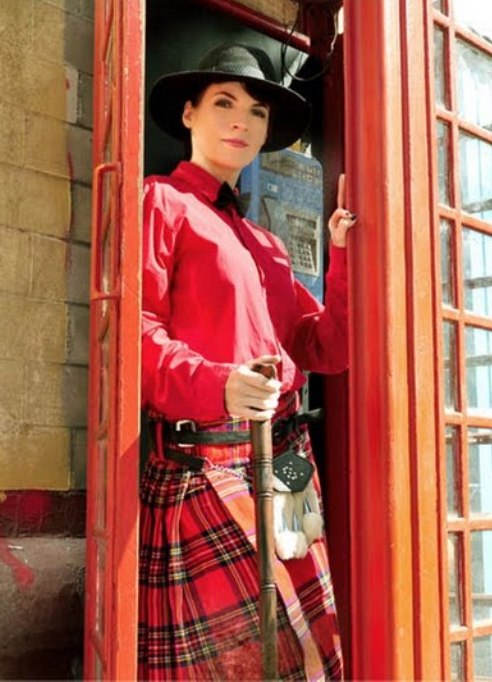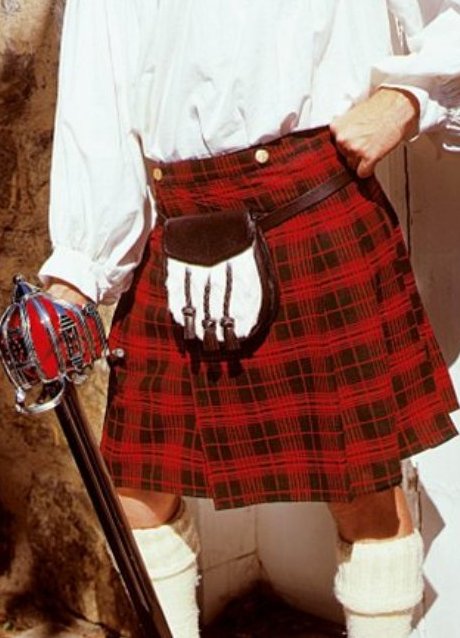
It is commonly believed that the very word kilt comes from the Old Icelandic kjilt, which in translation means "folded". But the true birthplace of the classical kilt is Scotland.
Kilt as a national Scottish clothing
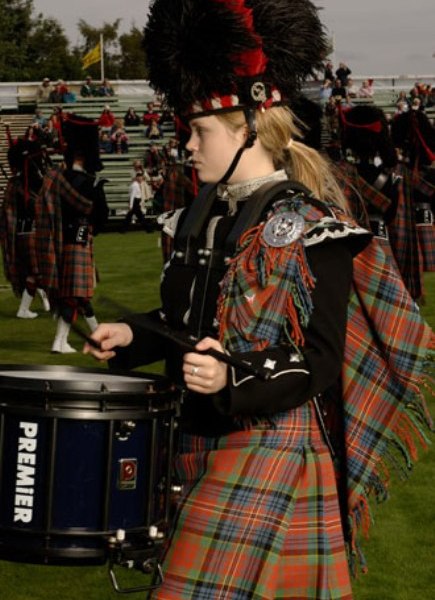
The official history of the kilt can be attributed to 1594. This year is the earliest of the surviving written descriptions of the kilt. It is characterized as folded clothing with mottled colors, which allows mountaineers to easily overcome obstacles, to wade through mountain streams and allows them to keep warm on cold nights. The fact is that there are large and small kilts. In this description, it was a great deal. It was a strip of cloth 12 inches long, about 1350 cm. Most of it was wrapped around the waist, gathering folds from behind and at the sides, fastened with buckles and a leather belt, and the rest was thrown over the shoulder. It is easy to imagine how, if necessary, these clothes turned into a warm blanket. The small kilt appeared in 1725, when the enterprising manager of one of the British factories on which the Scots mainly worked, proposed to leave only the lower part of the kilt for convenience. In this, slightly "reduced" form kilt lived to this day.
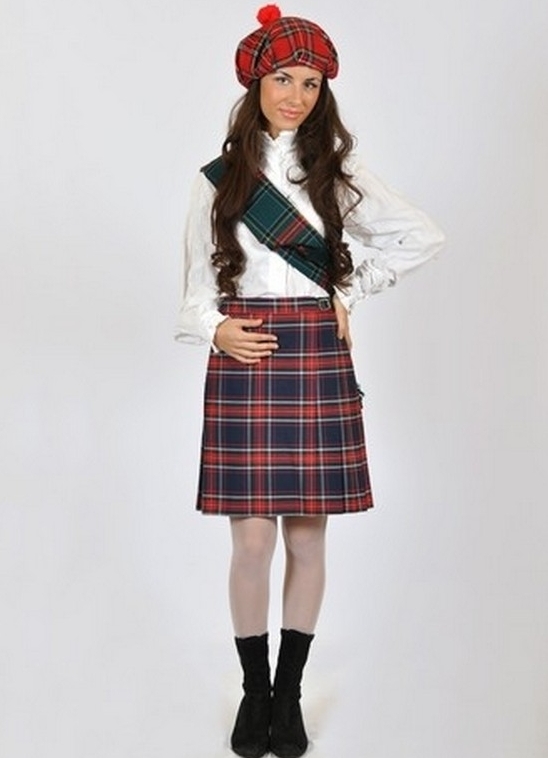
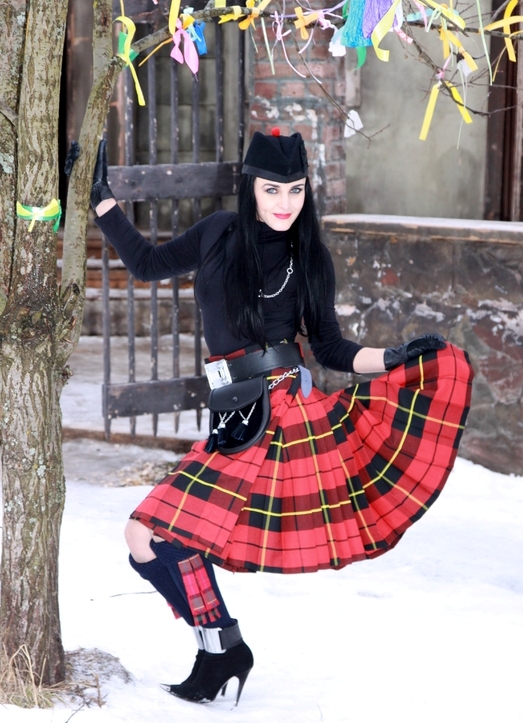
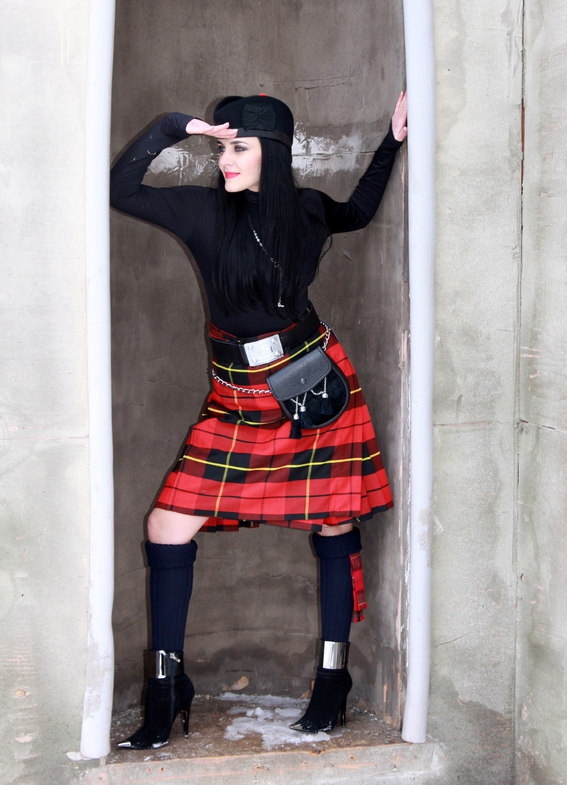
Traditions have preserved for descendants a whole set of rules concerning how to wear a kilt and what. And how to dress a kilt is generally a whole science. Tradition prescribes to lay out the cloth on the ground and measure a piece of cloth across the width of the hips. This part of the material will not be corrugated. The remaining part of the tissue is neatly picked up by folds along the width of the cage. A leather belt is placed under the laid fabric. Then the person is laid on an even part of the fabric face down, and gathered in folds with a belt wrap around the waist. When a person stands up, the belt is fastened, and the remaining loose piece of cloth is thrown over his shoulder, fixed with a special hair clip called kiltpin. In fact, Kilt has four mandatory accessories. Kiltpin, which has already been mentioned, usually takes the form of a sword and is traditionally decorated with Celtic runes. With a kilt wear long leggings (hosi) and take, which is sewn from the same fabric as the kilt itself. In front of the kilt, a purse-purse bag is worn. It is customary to sew from leather, decorate with fringe, fur or metal. The heaviness of this bag allows the skirt-kilt to remain relatively static when walking or strong wind.
Kilt, as the embodiment of rebellious spirit
But the secret of the perennial popularity of the kilt is, nevertheless, not its originality or practicality. Kilt became a kind of symbol of a proud and independent Scottish spirit. What was worth the fact that in the 17th century, when the British issued a law obliging men to wear trousers (and in fact prohibiting kilts), stubborn Scots found a way to get around it - they wore trousers ... on sticks, and dressed in kilts. Probably, therefore, a hundred years later, these clothes were used by the Irish. Irish kilt became the embodiment of Ireland's desire for independence.
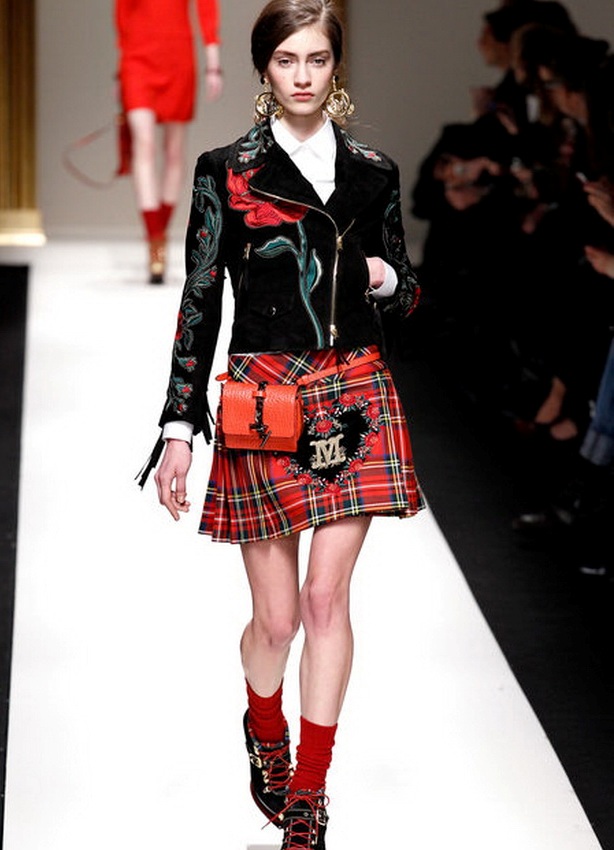
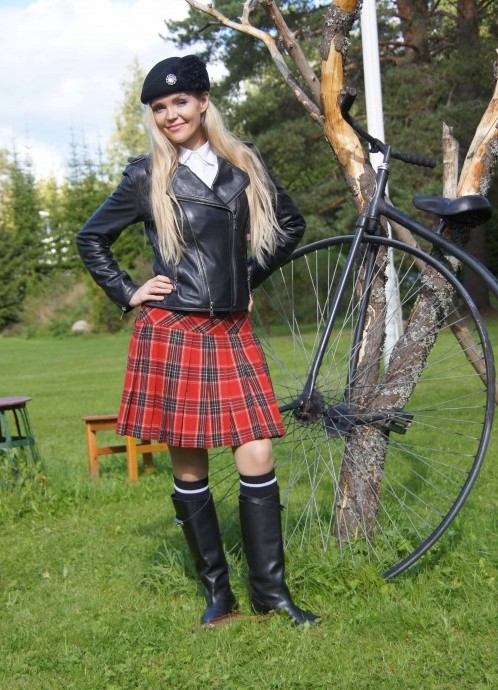
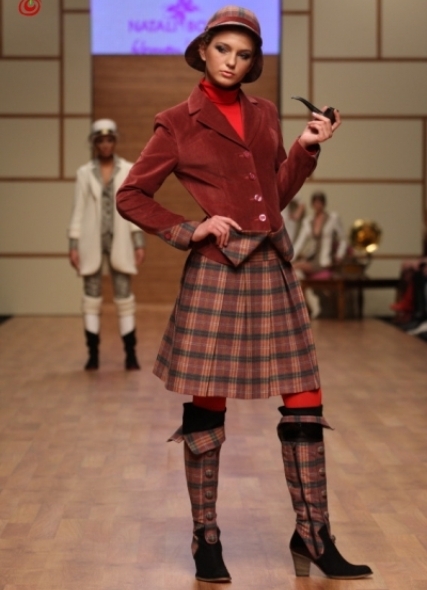
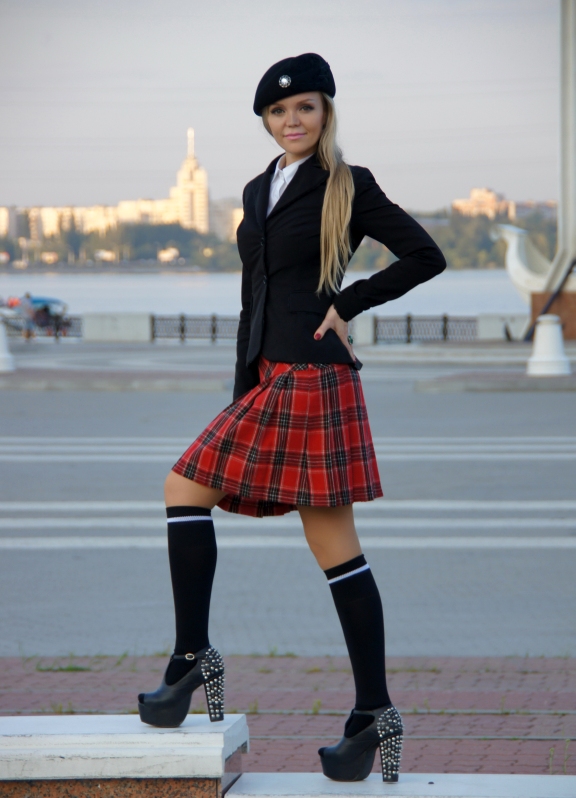
And in our time, the kilt's clothing has not lost this feature of its own. For example, the female kilt was born from a feminist aspiration to be dressed in men's clothing. Although, of course, its role was played by the ideal landing of the kilt on any figure and the cozy warmth of woolen fabric. Although kilt for women and allows yourself to deviate from the canons - the presence of a coquette, or freedom in the coloring and arrangement of folds, yet these clothes are more suitable for recreation than for the office.
Where do they wear a kilt and with what? The women's skirt-kilt will be on the place at an ethnic festival or a friendly party, but not at an official event. Go to her leggings and stylish broggi or other shoes, solid socks or sweaters in tone.
| | | |
| | | |
| | | |