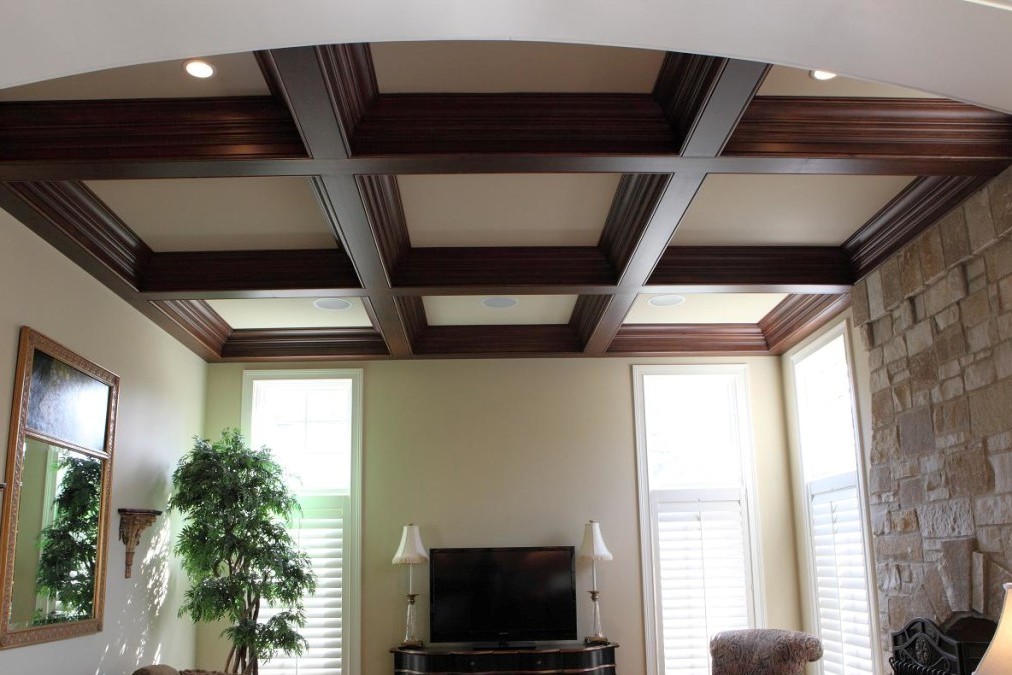
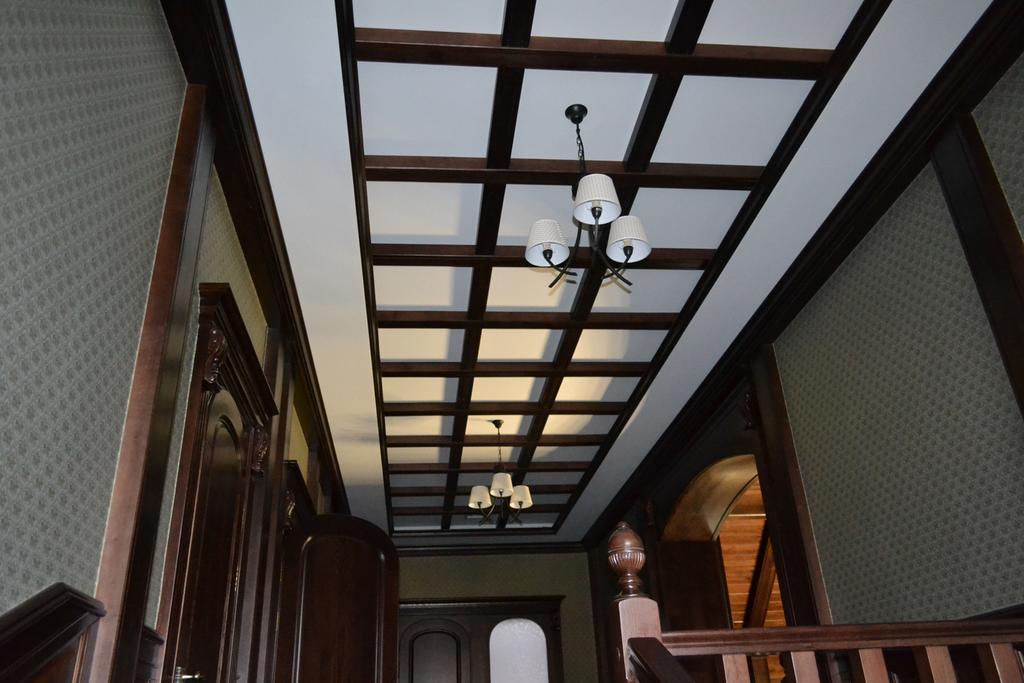
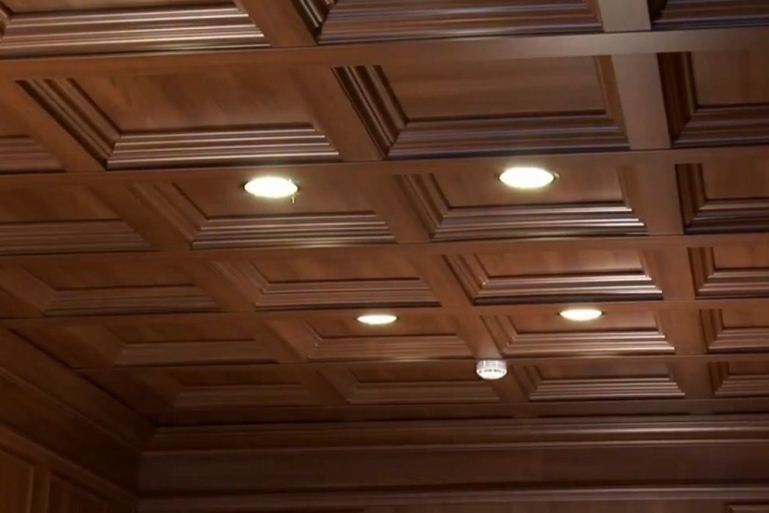
Coffered ceilings invented long ago, but then, having experienced a peak of popularity, they almost disappeared. Modern people in most do not know anything about them, but the furnishings and architectural styles, forgotten centuries ago, sometimes have a tendency to become very fashionable again. So the caissons again began to be used massively in the construction, decorating the cabinets, living rooms and kitchens of modern man. What does this name mean for a Slav name? How practical are these designs for a modern interior ?
The appearance of coffered ceilings
The French call the word "caisson" boxes. Indeed, a number of decorative depressions in the ceiling surface from below resemble beautiful cassettes, screwed to the vault. Why did people start using such a decorative device in their homes? The fact is that once the longitudinal and transverse ceiling beams were rough and the apertures between them were not decorated at all. But then people began to decorate the premises and such grooves began to adorn with carvings, stucco molding, marble tiles. It turned out that the caissons improves the interior quite well, reducing the impression of the massiveness of the floors of the old buildings. By the way, in addition to the visual effect, these elements can carry and practical value. For example, caissons serve very well as decorative niches for fixtures. In addition, such ceilings help to improve the acoustics in the room, which is very important for cathedrals and concert halls.
Suspended coffered ceiling in the interior
- Wooden coffered ceilings.
- Coffered ceilings from plasterboard.
- Coffered ceiling made of polyurethane.
- Coffered ceilings from MDF.
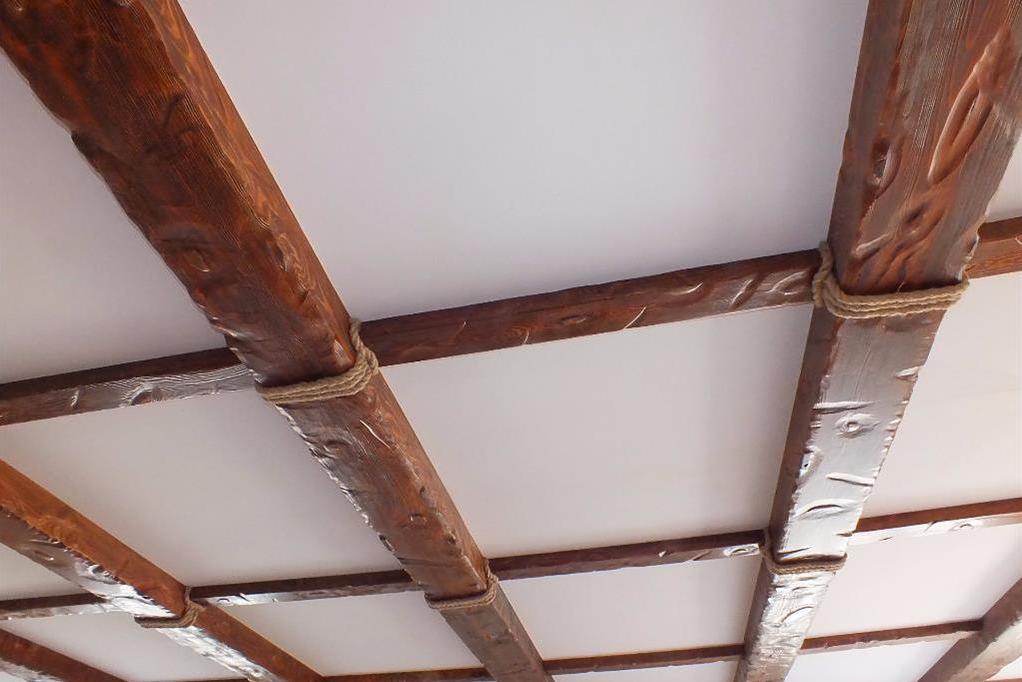
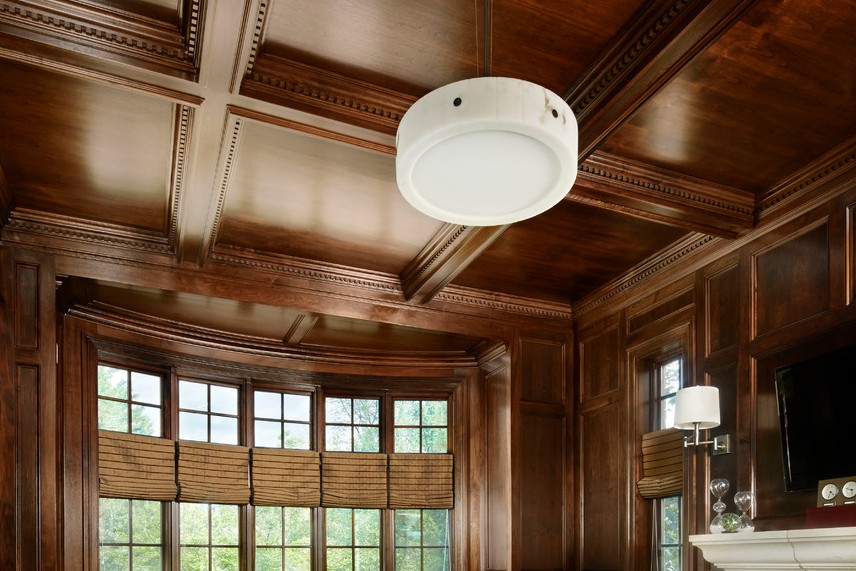
Almost perfect, albeit the most expensive option for such a ceiling, are coffered timber structures. Masters on order are able to design such a covering taking into account the height of the building, as well as interior stylistics. Naturally, a simple beginner with the installation of such a beauty can not cope, here you need the most accurate calculations and fitting all the elements to a millimeter. Also, a lot of attention should be paid to lighting coffered ceilings, simple appliances do not fit here, you need to choose products based on style and taking into account security measures. Using hand painting and the aging effect of the tree, you can create extremely exquisite and expensive-looking interiors, but note that the cost of careful and labor-intensive work is always very high.
| | | |
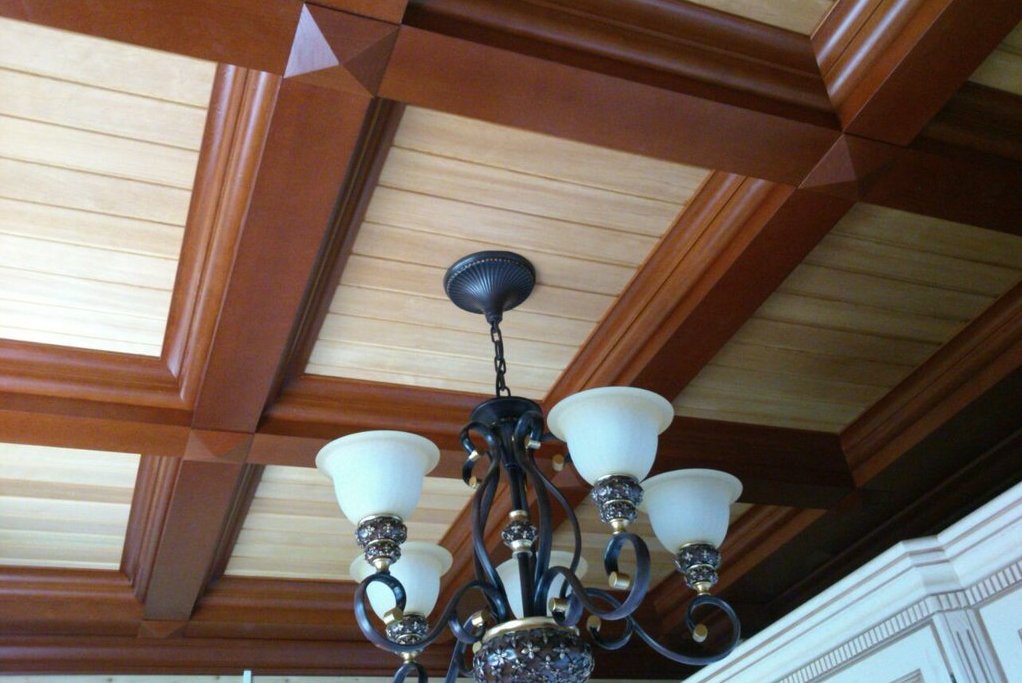
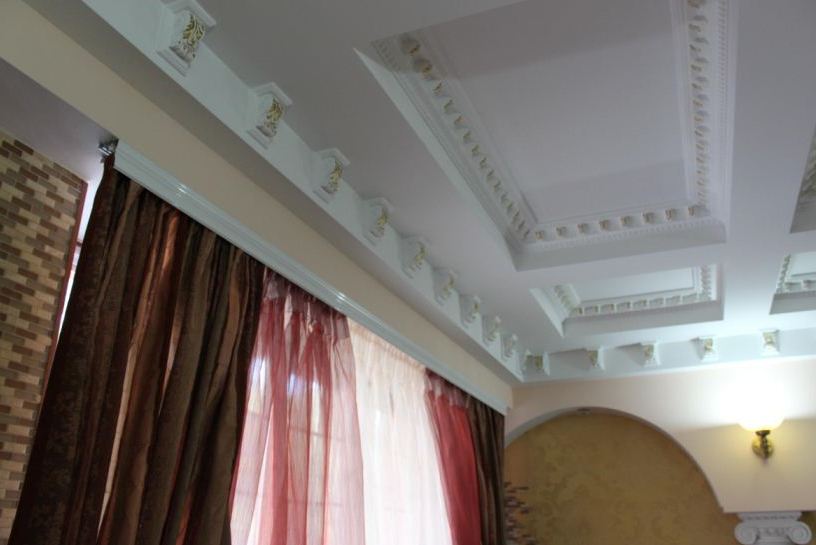
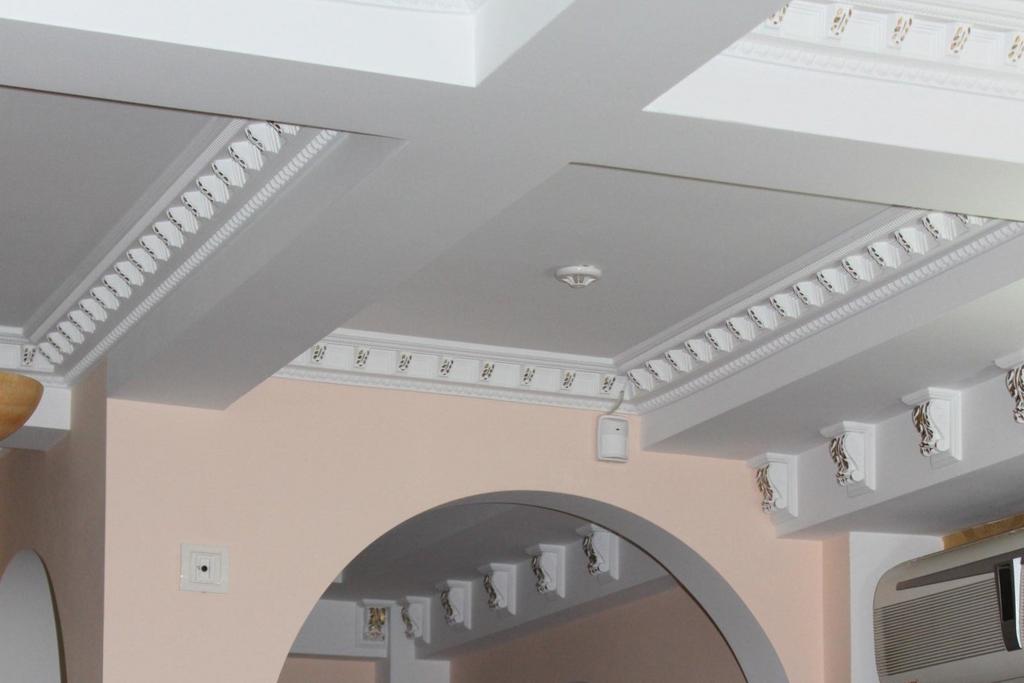
Inexpensive way to produce coffered ceilings is the finish with plaster. Frameworks made of galvanized metal and a box are mounted quite quickly and the owners do not incur special expenses. Then you can decorate the openings with stucco moldings , moldings or finished cassettes, assembling the whole structure, like some kind of children's designer. Note that the usual flat or even multi-level suspension system is not already a unique highlight, and the caisson ceiling from gypsum is still able to surprise and interest people.
| | | |
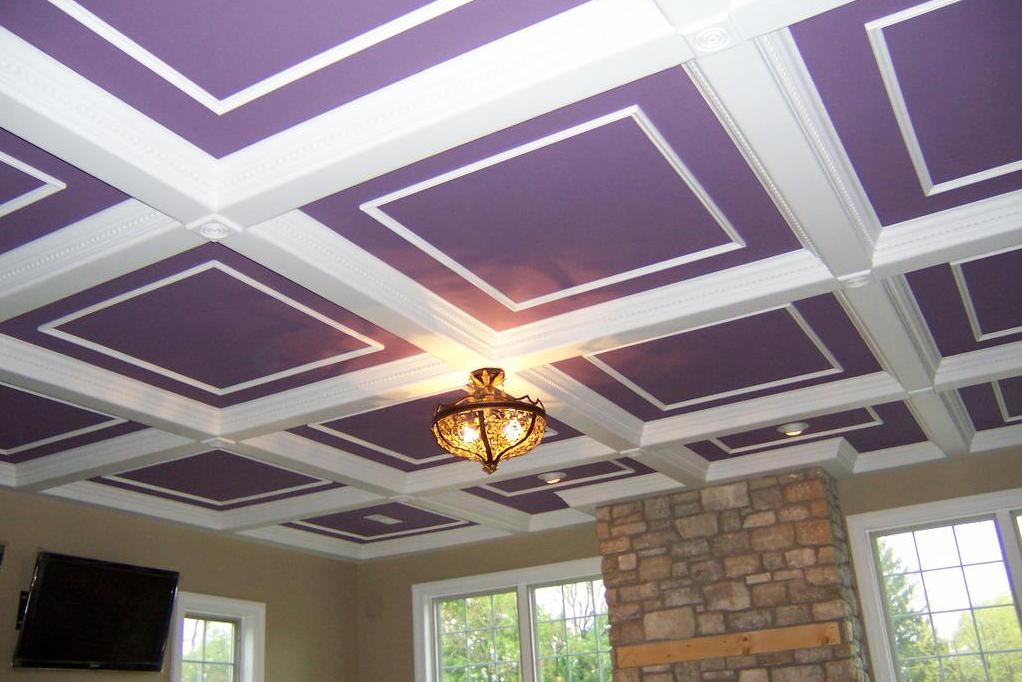
Gypsum is an environmentally friendly and valuable material, but the weight of blanks sometimes prevents working on large areas. Polyurethane is able to reduce the load at times and accelerate the assembly of the caisson ceiling structure, significantly reducing the cost of all costs. By the way, this polymer is not afraid of moisture and it is easy to paint, so the owners can change the color of the decorative elements of the caisson ceiling almost at any request.
| | | |
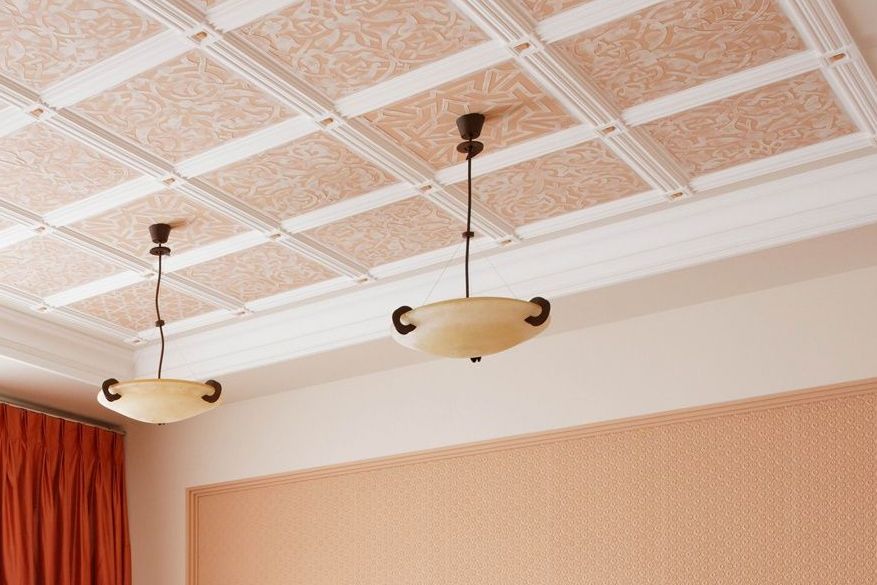
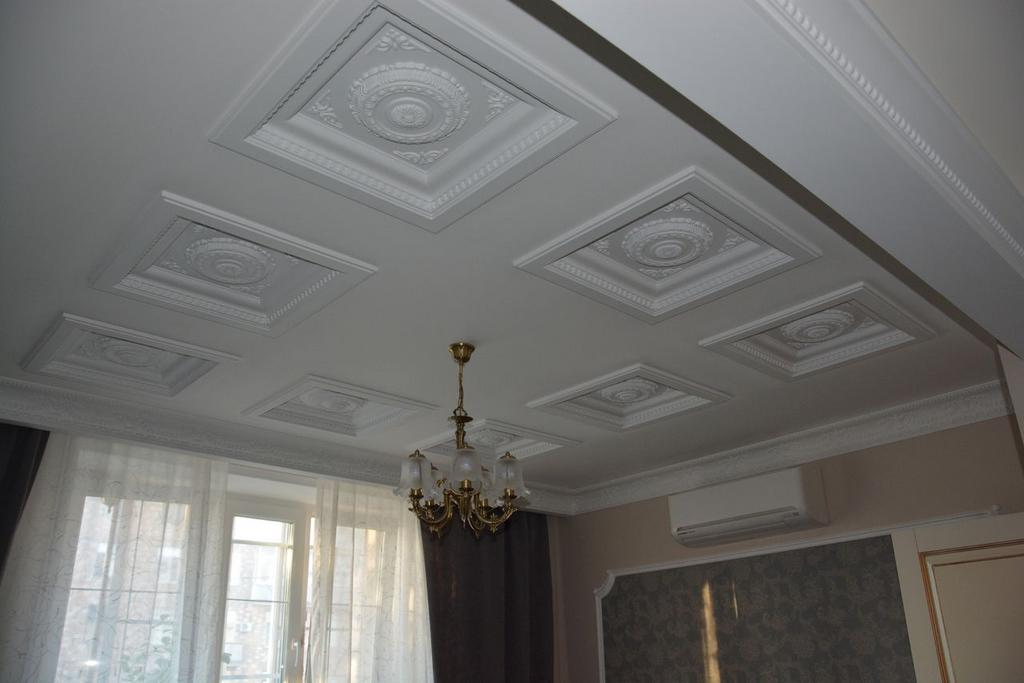
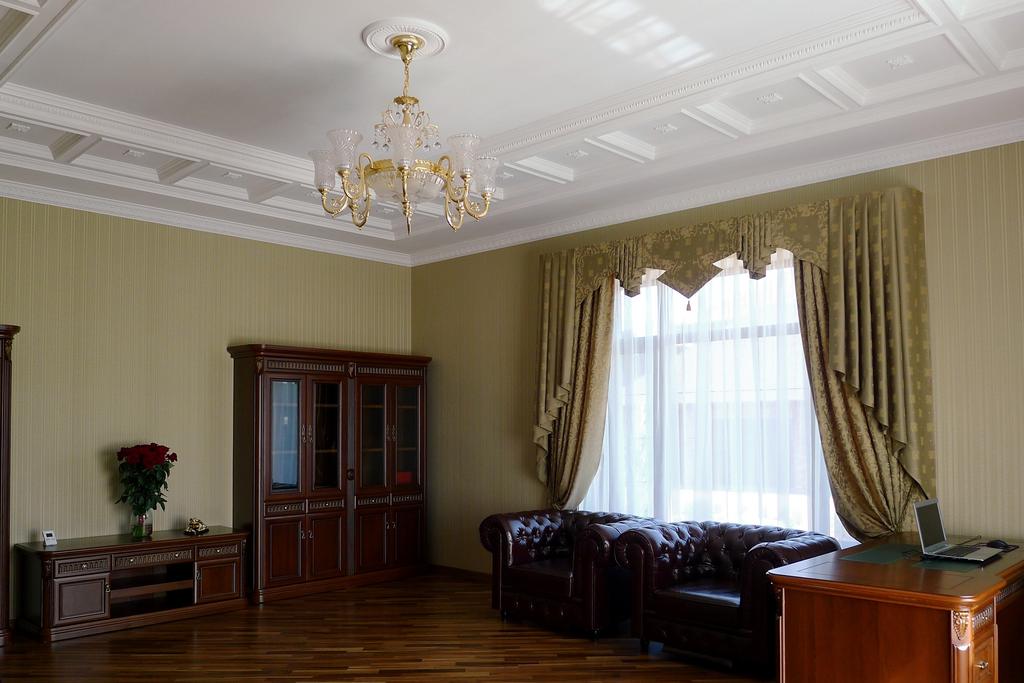
If you want to equip the coffered ceiling with the backlighting for the old days, but there is no means for fixing the present structure from solid wood, then it is possible to cheat a little using partially billets from MDF. In a sense, such a replacement has a good practical meaning. For example, raw wood after shrinkage can be deformed, and MDF plates do not suffer from such a problem in a dry room. Externally, similar caissons at a distance from any ceiling ornaments from natural oak or beech can not distinguish, because such a fake looks always the most natural and effective.
| | | |